Southco - Experts & Thought Leaders

Latest Southco news & announcements

Ready or not, energy infrastructure across the globe is evolving. Power companies and governments alike are implementing new features to support alternative energy sources, and battery energy storage systems (BESS) are at the heart of all of it. These systems make sure that the grid provides a stable output of energy, even when production from alternative sources wanes. With such a critical role in energy infrastructure, storage systems need to be extremely reliable. If they go down on a low production day, it could mean rolling blackouts for an entire region. Meeting strict standards For an enclosure to pass rigorous testing, every component on that enclosure must be trusted not to fail That’s why the enclosures that safeguard these systems need to meet strict standards, so users can rest easily knowing that their BESS can withstand the harshest environmental conditions and safely contain failures when they occur. For an enclosure to pass rigorous testing, every component on that enclosure must be trusted not to fail. Let’s explore some of these standards and considerations, the environments they are used in, and the hardware that can help meet them. non-hazardous environments Outlining specifications for enclosures in non-hazardous environments with environmental considerations, UL 50E covers gasket compression, fastener performance, and other factors that protect an enclosure from the elements. Its goal is withstand everyday wear caused by water, pollution, dust, and corrosion. Naturally, the most vulnerable parts of an enclosure are the doors and access panels, so designers need to get the hardware right to make sure their enclosure meets this standard. One of the most reliable ways to meet this standard is with a strong compression latch and quality gasket. However, keep in mind that the larger and thinner the panel is, the more likely it is to flex under compressive force. Multi-point compression system It provides simultaneous compressive force at numerous places across the edges of a panel This flexing can open small gaps between the panel and gasket if not addressed in design, and often the best way to solve this problem is with a multi-point compression system. It provides simultaneous compressive force at numerous places across the edges of a panel, giving it less room to disperse and flex before another latch reinforces it. Additionally, even if an enclosure is sealed against water and dust, that protection won’t last forever if the panel’s hinges cannot also withstand those conditions. Just as a chain is only as strong as its weakest link, an enclosure is only as secure as its weakest component. Designers need to ensure that there are no weak spots that the elements can erode over time, from latch to hinge. Fine Particle and Water Jet Protection In environments where fine particles like sand or dust in the atmosphere are common, IP65 is a critical rating to achieve. These particles cause abrasive wear for hinges and other moving parts, shortening their lifespan and preventing smooth operation. This rating also resists low-pressure water spray, so installations near open water have some protection. For applications that need additional protection from water, IP66 devices resist strong water jets, such as heavy rain, hoses, and waves. This rating is the preferred one for outdoor industrial equipment like BESS installations. Sealed latching solutions like the Southco F2 Compression Latch System are an ideal option for meeting these ratings and protecting the BESS enclosure from the elements. catastrophic battery failure The enclosure and its door are the last line of defense between contained damage and total system collapse While specific regulations for explosion resistance are uncommon, it may be the most important quality in a battery enclosure. While other regulations work together to prevent an arc explosion from happening in the first place, in the event of catastrophic battery failure, the enclosure and its door are the last line of defense between contained damage and total system collapse. This is where the right access hardware is absolutely critical. Panels are the only parts of the enclosure designed to open, and are the most likely point of failure. They need to be strongly secure. reliable access system To achieve this, manufacturers need a trusted partner to help develop a strong, reliable access system for their panels. The forces at work here are so strong that a standard latch may not be enough. Some systems even have a series of sturdy hooks that latch into the frame, dispersing energy throughout the enclosure without breaking. Finding a partner that can laser-focus on this issue and design the right system for the job can stop an accident from becoming a catastrophe in a battery energy storage system. damaging the entire system This standard covers flammability for certain plastics based on their burning behavior This standard covers flammability for certain plastics based on their burning behavior. Those that have seen a lithium-ion battery fail should know exactly why this is important for BESS enclosures. With so many battery enclosures close together, if one fails, the surrounding enclosures need to be protected from that failure. Damage from a fire in a single enclosure can damage surrounding ones, causing a chain reaction that damages the entire system. In terms of flammability, the gasket is the most likely point of failure, so it needs to withstand the heat of battery failure. Make sure gaskets in electrical enclosures are durable enough that fire and heat don’t escape through gaps in the access panel. Security and Monitoring Finally, in addition to all the environmental considerations, designers need to plan for the human factor. Battery energy storage systems are often built in remote locations without a consistent human presence to monitor them. In these conditions, it falls to hardware to prevent entry from curious passersby or worse, vandals. Luckily if designers have followed the safety standards above, they are already prepared for this kind of tampering. One of the best ways to prevent forced entry is with a multi-point latching system, the same kind that achieves UL50 E compliance and explosion resistance. Multi-point latching systems In more remote locations, electronic monitoring and access control can also be a massive asset Multi-point latching systems make it difficult for attackers to gain entry by hiding the points where the frame is secured to the door, so they don’t know where to pry. Even if they happen to find one latch, the other latches in the system keep the door secure while under attack. While locks only guarantee a certain level of security, making these panels harder to access can be a significant deterrent to theft and vandalism. In more remote locations, electronic monitoring and access control can also be a massive asset. Keep an eye out for hardware with integrated sensors or, even better, remote access sharing. Tools like the Keypanion App from Southco are great ways to get started with wireless access sharing and tracking, so users can tell exactly who has accessed their equipment, and when. Protecting the Future of Energy Battery energy storage systems are in their infancy compared to traditional energy infrastructure While the renewable energies industry is expanding across the globe, battery energy storage systems are in their infancy compared to traditional energy infrastructure. At this stage, reliability is the most important factor when it comes to earning public trust, and these standards combine to form an enclosure that can easily withstand its environment and resist the powerful forces at work in the case of battery failure. This means that every component of the enclosure needs to withstand the environment they are placed in over time, from the latch to the hinge. If even one part of the enclosure fails, the security of the entire structure can be compromised. Right access hardware Having the right access hardware can make all the difference when enclosures are tested in extreme environmental conditions. “Energy infrastructure is evolving fast, and our previous experience in infrastructure improvement has emphasized the importance of reliability, resilience, and high performance in new technologies,” says Southco Business Development Manager Phil Taylor. Demonstrating reliability and resilience through both design and operation will pave the way for even more growth in the future as the public sees the benefit of BESS. When designers follow these standards and ratings, they can ensure that the future of energy infrastructure remains bright.

As the race for the best AI technology heats up, manufacturers are turning to liquid immersion cooling to stabilize the servers of the future. While this technology provides far superior cooling properties compared to traditional fans, it also brings a new set of challenges, particularly around maintenance. Server blades are packed extremely tightly in a small space and immersed in liquid coolant, which can make it difficult to remove a single blade for service. Introducing the RA Rack Attach During maintenance, screws can be dropped and lost in the enclosure and hands can slip on slick metal as technicians try to lift heavy, liquid-covered hardware. These mishaps risk costly damage to server blades, and more importantly, loss of server uptime. In this AI race, the more time they spend running the better off they are, and every second counts. That is why Southco is introducing the RA Rack Attach. Integrated trigger in the Rack Attach handle The RA Rack Attach replaces traditional screws that normally secure a server blade to a rack The RA Rack Attach replaces traditional screws that normally secure a server blade to a rack. Instead, those screws are used to attach the RA to the blade, and an integrated pawl secures the blade to the rack. This pawl retracts when a technician presses an integrated trigger in the Rack Attach handle, providing easy release from the rack, and a secure grip for the technician as they lift out the blade in one fluid motion. No more screws slowing down maintenance, and increased uptime for servers as they support the tech of the future. Implementing the Southco RA Rack Attach While space is at a premium in these liquid-cooled server racks, the RA Rack Attach barely takes up any. The device is only 7 mm thick, but its steel construction enables it to support 50 kg of weight. Technicians get a strong, ergonomic grip with barely any space used by the Rack Attach. These features drastically decrease maintenance time and risk of damage and injury to technicians. Implementing the Southco RA Rack Attach means lower costs, increased uptime, and a leg up in the race to power the technology of the future.
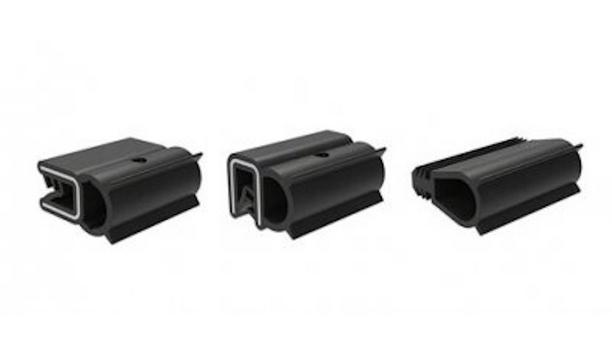
The shift to renewable energy is here, and with it comes valuable infrastructure that needs protecting. Rain, dust, and other environmental factors are constant threats to outdoor equipment, and a quality gasket could be the difference between safe energy storage systems and costly damage. Along with their sealing benefits, gaskets also provide vibration resistance and improve a door’s structural integrity. This keeps enclosures quiet and safe, no matter how much the internal machinery may hum. Keep the outdoors out By providing a tight seal, gaskets help to maintain the internal environment of the enclosure One of the primary functions of gaskets in enclosure manufacturing is to provide environmental sealing. This is crucial for applications where dust, dirt, moisture, and other contaminants may compromise the integrity and functionality of the enclosed equipment. By providing a tight seal, gaskets help to maintain the internal environment of the enclosure, ensuring that the equipment operates efficiently and reliably, and the outdoors stays where it belongs. Cut the noise Vibration is a common issue when it comes to enclosure manufacturing, as it can lead to abrasive noise and damage to sensitive equipment. Eliminating noise pollution is particularly necessary in residential areas, where homeowners must be assured the enclosure will not disturb their daily lives. Gaskets designed with good compression characteristics can dampen vibration and minimize rattle. This not only enhances the operational life of the equipment, but also improves the overall user experience. Enhancing structural Integrity and Aesthetics Gaskets, while primarily functional, also ensure clean lines and seamless integration of the enclosure components. The right gasket material and design can prevent unsightly gaps and misalignments between doors and frames, contributing to a polished and professional appearance. Much like vibration resistance, the esthetics of an enclosure can be integral to its success in residential areas. While temperatures can change over time, warping the enclosure’s metal exterior, gaskets remain malleable, and provide increased tolerance for slight variations in a panel’s shape. This reduces maintenance costs and part replacement. Choosing the right gasket and hardware The importance of gaskets in enclosure manufacturing cannot be overstated. Their functionality ensures that enclosures are not only secure and accessible, but also well-protected from environmental factors and vibration damage. But they are only part of a solution. Users judge devices based on how they physically interact with them. It is critical to combine a gasket with the right latch, hinge, and handle for a complete package that ensures a safe, high-quality experience for end users. As the demand for reliable enclosures continues to grow, these components will remain crucial in delivering solutions that meet the highest standards of performance and quality.