The latest report from the International Energy Agency (IEA) highlights growing concerns over critical mineral supply risks, which are poised to disrupt global markets by 2025.
Despite the current appearance of abundance and declining prices since 2021 and 2022, this report reveals that a few countries are increasing their dominance over mineral supplies, coupled with rising export restrictions that could lead to significant disruptions.
Insights from the 2025 Global Critical Minerals Outlook
Despite the current appearance of abundance and declining prices since 2021 and 2022
The 2025 edition of the IEA's Global Critical Minerals Outlook delivers comprehensive data and insights into the supply, demand, and investment trends for essential energy-related minerals such as copper, lithium, nickel, cobalt, graphite, and rare earth elements.
This annual report also introduces an updated Critical Minerals Data Explorer—an interactive tool that offers users a detailed view of the latest IEA projections. For the first time, the report covers a wider array of strategic minerals crucial to sectors like high-tech and aerospace.
Geopolitical Challenges and Mineral Market Concentration
IEA Executive Director Fatih Birol emphasized the importance of critical minerals in maintaining global energy and economic security amidst high geopolitical tensions. "This new analysis reviews what is at stake and what needs to be done to improve the resilience and diversity of critical mineral supply chains—a key concern for ensuring the reliability, affordability and sustainability of energy in the 21st century," he stated.
According to the report, the dominance of the top three producers in the markets for minerals such as copper, lithium, and nickel has increased sharply. In 2024, their average market share rose to 86% from around 82% in 2020. The majority of supply growth has been concentrated with key suppliers: Indonesia for nickel and China for others.
Sustainable Supply Chains and Investment Trends
The demand for key minerals, especially lithium, has surged, increasing by nearly 30% in 2024 alone
Despite an acknowledgment of these challenges by policymakers, recent analyses of announced projects suggest that progress towards diversified supply chains will be slow. Predictions indicate only a minimal reduction in market concentration over the next decade, returning to levels seen in 2020. "Even in a well-supplied market, critical mineral supply chains can be highly vulnerable to supply shocks, be they from extreme weather, a technical failure or trade disruptions," noted Dr. Birol.
The demand for key minerals, especially lithium, has surged, increasing by nearly 30% in 2024 alone. However, supply increases, largely from China, Indonesia, and African regions, have mitigated prices, particularly those of battery metals. This is causing concern, as investment in these critical minerals has slowed, with growth falling to 5% in 2024 compared to 14% in 2023.
Impacts on Copper and Export Restrictions
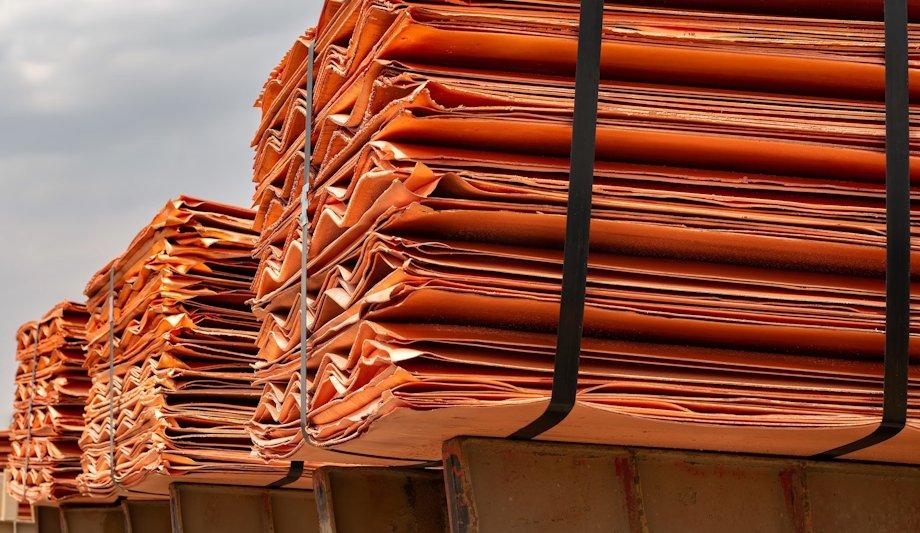
The report also draws attention to significant risks facing the copper market. The anticipated demand, driven by global electricity network expansions, is expected to create a 30% supply gap by 2035. Moreover, increasing export restrictions—affecting 55% of the minerals analyzed—are expanding to include not just materials but also processing technologies, further impacting supply security.
China's Role and Emerging Technologies
China remains the major refiner for 19 out of 20 minerals examined in the report, controlling about 70% of the market. Among these, 15 have shown greater price volatility than oil.
The report also examines supply chains for new battery technologies like LFP and sodium-ion, which are posing challenges to existing nickel-based lithium-ion batteries. China holds a significant position in these supply chains as well, controlling vital inputs like manganese sulfate and phosphoric acid.
IEA's Continuing Contribution
Since its initial critical minerals report in 2021 and the receipt of new directives from Member governments in 2022, the IEA has broadened its focus on supporting policymakers through its Critical Minerals Security Programme. This initiative forms part of ongoing global discussions, such as those at the Summit on the Future of Energy Security, co-hosted with the UK government.
While today’s critical mineral markets may appear well supplied, with prices well down from the highs seen in 2021 and 2022, a new IEA report finds that a combination of increasing supply concentration in a handful of countries and the spread of export restrictions is raising the risk of painful disruptions.
The 2025 edition of the IEA’s annual Global Critical Minerals Outlook, presents the latest data and analysis on supply, demand, investment and more for key energy-related minerals, including copper, lithium, nickel, cobalt, graphite, and rare earth elements.
It is accompanied by an updated Critical Minerals Data Explorer, an interactive online tool that allows users to explore the latest IEA projections. For the first time, the report also includes analysis of a broader range of energy-related strategic minerals that play vital roles in the high-tech, aerospace and advanced manufacturing sectors.
Safeguarding global energy
“In a world of high geopolitical tensions, critical minerals have emerged as a frontline issue in safeguarding global energy and economic security. With our world-leading data, analysis, and policy recommendations, the IEA provides crucial support to countries across the globe as they develop their medium- and long-term strategies,” said IEA Executive Director Fatih Birol.
“This new analysis reviews what is at stake and what needs to be done to improve the resilience and diversity of critical mineral supply chains – a key concern for ensuring the reliability, affordability and sustainability of energy in the 21st century.”
Report findings
The report finds that critical mineral markets have become more concentrated
The report finds that critical mineral markets have become more concentrated, not less, particularly when it comes to refining and processing.
For copper, lithium, nickel, cobalt, graphite and rare earth elements, the average market share of the top three producers rose to 86% in 2024 from around 82% in 2020, with almost all supply growth coming from the single top supplier: Indonesia for nickel, and China for all other minerals.
While policy makers have woken up to the challenges, a detailed IEA analysis of announced projects indicates that progress towards more diversified critical mineral supply chains is set to be slow.
Critical mineral supply chains
Based on today’s policy settings and investment trends, the average share of the top three suppliers is projected to decline only marginally over the next decade, effectively returning to the concentration levels seen in 2020.
“Even in a well-supplied market, critical mineral supply chains can be highly vulnerable to supply shocks, be they from extreme weather, a technical failure or trade disruptions,” Dr Birol said.
“The impact of a supply shock can be far-reaching, bringing higher prices for consumers and reducing industrial competitiveness.”
Strong demand for key minerals
Lithium demand rose by nearly 30% in 2024, significantly exceeding the 10% annual growth rate
Demand growth for key energy minerals has been strong in recent years. Lithium demand rose by nearly 30% in 2024, significantly exceeding the 10% annual growth rate seen in the 2010s.
However, major supply increases – led by China, Indonesia and parts of Africa – have put downward pressure on prices, especially for battery metals. Since 2020, supply growth for battery metals has been twice the rate seen in the late 2010s.
Yet looking at supply and demand balances over the next decade, the report also sees risks. Investment momentum in critical minerals has weakened: spending grew by just 5% in 2024, down from an increase of 14% in 2023. Exploration activity plateaued in 2024, marking a pause in the upward trend seen since 2020, and start-up funding showed signs of a slowdown.
Major risks facing copper markets
In particular, the report highlights major risks facing copper markets. With demand set to surge as countries look to expand their electricity networks, the current copper mine project pipeline points to a 30% supply deficit by 2035.
Growing export restrictions could also impact the security of supply. Of the energy-related strategic minerals covered by the report, 55% are now subject to some form of export control. In addition, the scope of restrictive measures is widening to encompass not just raw and refined materials but also processing technologies.
Expanded analysis
China is the major refiner for 19 of the 20 minerals analyzed and has an average market share of around 70%.
The report’s expanded analysis of 20 energy-related strategic minerals finds that while market sizes may be small for some, disruptions could have outsized economic impacts.
China is the major refiner for 19 of the 20 minerals analyzed and has an average market share of around 70%. And 15 of the minerals have exhibited greater price volatility than oil.
This year’s Outlook also explores mineral supply chains for emerging battery technologies, such as LFP and sodium-ion, which are challenging the incumbent nickel-based lithium-ion batteries. The report notes that these technologies still face high concentration risks, with China controlling the supply chains for vital material components such as manganese sulphate and phosphoric acid.
Landmark report
Since the IEA published its landmark report on critical minerals in 2021 and received new ministerial mandates from Member governments in March 2022, the Agency has significantly expanded and deepened its work on critical minerals to support policymakers.
The IEA began publishing its annual analysis of markets in 2023 and recently held an emergency preparedness exercise as part of its expanding Critical Minerals Security Programme.
Critical minerals were also a major focus at the Summit on the Future of Energy Security hosted in London in partnership with the UK government.