International Energy Agency (IEA) - Experts & Thought Leaders














Latest International Energy Agency (IEA) news & announcements
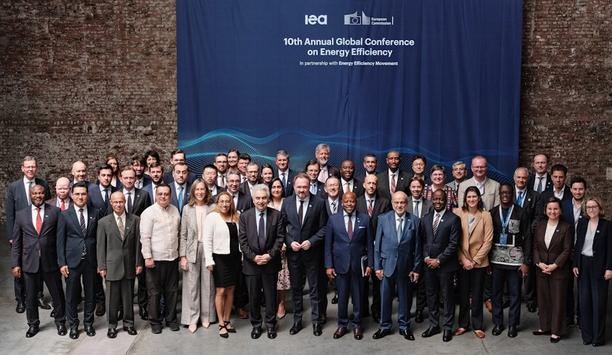
Countries around the world have backed the economic, social, and sustainability advantages of energy efficiency. In a joint statement issued at the IEA’s Annual Global Conference on the issue in Brussels, ministers and senior officials representing 47 governments reaffirmed “the role energy efficiency plays to ensure affordable and secure energy services for our citizens, enhance competitiveness of our businesses, and safeguard the energy security of our nations.” Joint statement The governments that jointly issued the statement declared that “after the historic agreement at COP28 to double energy efficiency progress by 2030, now is the time to deliver greater impact through stronger collective and national actions, and technological improvements across all sectors.” They also underscored “the need to strengthen energy efficiency action through implementation of effective policy” and identified “actions regarding affordability, better quality of life, and competitiveness that can deliver strong progress towards our overall goals while bringing the maximum benefits to all people as quickly as possible.” 10th IEA Global Conference on Energy Efficiency The statement followed from discussions at the 10th IEA Global Conference on Energy Efficiency The statement followed from discussions at the 10th IEA Global Conference on Energy Efficiency, which convened almost 700 participants from close to 100 countries, including dozens of ministers and CEOs, as well as representation from youth and labor movements. The Global Conference was co-chaired by European Commissioner for Energy and Housing Dan Jørgensen and IEA Executive Director Fatih Birol, and was organized with the support of the Energy Efficiency Movement. Energy efficiency “Energy efficiency is at the heart of energy security,” said IEA Executive Director Fatih Birol. “I’m encouraged by the unity on this among the many high-level participants at the IEA’s 10th Annual Global Conference on Efficiency, as demonstrated by the joint statement from nearly 50 governments from around the world.” “There is broad agreement that both together, and as individual countries and companies, we can reap the benefits of what we at the IEA call ‘the first fuel’ – for lowering energy bills, bolstering competitiveness and energy security, and reducing emissions.” Energy security "Energy security, affordability, and climate change are among the defining challenges of our time,” said European Commissioner for Energy and Housing Dan Jørgensen, who at the conference detailed the EU’s new impetus for energy efficiency. “Energy efficiency is a key solution for all of them. This is why we will double down on our actions both at home and globally to make sure no energy unit goes to waste. The cleanest and cheapest energy is the energy we don't use.” Clean energy transitions In their statement, ministers pledged to place people at the center of clean energy transitions In their statement, ministers pledged to place people at the center of clean energy transitions and to focus on energy efficiency policies that are fair, benefit everyone, and leave no one behind. They also committed to “harness[ing] innovation and deploy[ing] digital technologies to maximize the benefits of energy efficiency – putting digitalization at the heart of our modern energy systems, and in particular our industrial facilities, buildings and electricity systems.” Following on from the international Summit on the Future of Energy Security in London, ministers noted the importance of holistic approaches to energy security and recognized the importance of energy efficiency and demand-side measures in ensuring more secure energy. Energy Efficiency Policy Toolkit They also acknowledged and drew upon new IEA research and tools including an updated Energy Efficiency Policy Toolkit, new analysis on the benefits of efficiency, and the publication Gaining an Edge: The Role of Energy Efficiency in Enhancing Competitiveness. In addition, ministers asked the IEA to continue monitoring improvements in efficiency through its Energy Efficiency Progress Tracker.
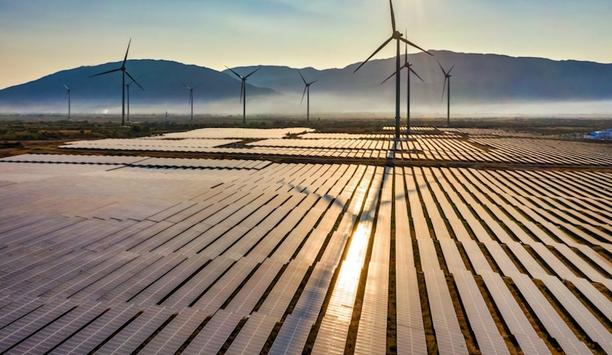
New IEA report examines opportunities for countries across the region to integrate more solar and wind into their power systems to help reach energy security and emissions goals. Southeast Asia’s electricity demand is rising at one of the fastest rates in the world, underscoring the need for countries to diversify energy supplies and reinforce grid infrastructure. A new IEA report released highlights how countries in the region can leverage their abundant renewable resources, notably wind and solar PV, to meet soaring demand and achieve their energy priorities. Risks of fuel price volatility Electricity demand in the region grew by more than 7% in 2024 – nearly double the global average – and is set to double again by 2050, driven by rapid urbanization, industrial growth and rising living standards. Meeting demand growth securely and affordably will require coordinated action Now, many member states of the Association of Southeast Asian Nations (ASEAN) depend heavily on imported fuels, which exposes the region to risks of fuel price volatility and supply disruptions, as seen during the recent global energy crisis. Meeting demand growth securely and affordably will require coordinated action from policymakers, regulators and utilities across the region, according to the report. Options for new electricity generation Southeast Asia is particularly well placed to benefit from its renewable energy resources, the report finds. With an estimated 20 terawatts of untapped solar and wind potential – equivalent to around 55 times the region’s current total power capacity – even a fraction of this could meet future demand while strengthening energy security. Solar and wind are now among the most cost-competitive options for new electricity generation across Southeast Asia. Harnessing these resources would lower fuel imports, reduce exposure to volatile global markets, and help countries meet their emissions reduction targets. Competitive auctions and direct power purchase agreements Regional initiatives are already building momentum. The ASEAN Vision 2045 and upcoming renewal of the ASEAN Plan of Action for Energy Cooperation (APAEC) place strong emphasis on clean energy deployment, while eight of ten ASEAN member states have announced net-zero emissions targets. Policy instruments such as competitive auctions and direct power purchase agreements are expanding across the region to accelerate renewable adoption. Impacts on the power system The report underscores that the near-term challenges from growing shares of variable renewable energy are manageable through proven low-cost measures. Now, all ASEAN countries except Vietnam are in the early phases of integrating variable renewables, a stage where impacts on the power system remain modest. Practical steps, such as unlocking flexibility in existing power plants, improving forecasting, updating grid codes and modernising grid monitoring, can be implemented without major system overhauls. Expanding demand response through smart air-conditioners, EV charging and storage could further support integration while lowering consumer bills. The report will be presented at the high-level plenary session of the ASEAN Energy Business Forum (AEBF) on 15 October 2025 in Kuala Lumpur. Challenges of renewable integration Recognizing Southeast Asia’s crucial role in shaping global energy trends, the IEA recently opened the IEA Regional Cooperation Center based in Singapore, the first IEA office outside the Agency’s Paris headquarters. The Center builds on long-standing relationships and supports the region in tackling the pressing challenges of renewable integration, grid modernization and energy transitions.

Countries' policy plans point to rising electricity generation from natural gas, renewables and nuclear to meet rapid growth in consumption, with oil's role in the power sector set to shrink. Electricity consumption in the Middle East and North Africa has soared in recent decades and is set to keep rising sharply, with a range of sources expected to meet the growing demand as countries seek to diversify their power supplies, according to a new IEA report out now. Global energy system The Future of Electricity in the Middle East and North Africa provides detailed country-by-country analysis of the electricity sectors across a region that has long been a cornerstone of the global energy system. The report finds that electricity demand in the Middle East and North Africa tripled between 2000 and 2024 as populations and incomes rose. Based on the policy settings, the region’s electricity consumption is projected to rise by another 50% by 2035 – adding the equivalent of the current demand of Germany and Spain combined. Driving up electricity consumption With a climate characterized by extreme heat and water scarcity in most parts of the region, the largest portion of the projected increase in electricity demand over the next decade – around 40% – is set to come from cooling and desalination. Other important factors driving up electricity consumption in the region include urbanization, industrialization, the electrification of transport and the expansion of digital infrastructure such as data centers. Electricity demand growth to 2035 Now, natural gas and oil overwhelmingly dominate the region’s electricity mix, accounting for over 90% of total generation, the report finds. However, many countries – including Saudi Arabia and Iraq – are pursuing policies to reduce the role oil plays in their power systems, freeing it up for higher value uses or export. As a result, based on the policy settings, natural gas is set to meet half of electricity demand growth to 2035 in the Middle East and North Africa. This would help reduce oil-fired output to just 5% of total generation, down from 20% now. Meanwhile, solar PV capacity in the region is on course to increase tenfold by 2035, pushing the share of renewables in the region’s electricity generation to around 25%. And nuclear power is poised to expand strongly, with capacity set to triple. Need for air conditioning and water desalination “Demand for electricity is surging across the Middle East and North Africa, driven by the rapidly rising need for air conditioning and water desalination in a heat- and water-stressed region with growing populations and economies. The region has already seen the third-largest growth in electricity consumption globally since the start of the century, after China and India." "To meet this demand, power capacity over the next 10 years is set to expand by over 300 gigawatts, the equivalent of three times Saudi Arabia’s current total generation capacity,” said IEA Executive Director Fatih Birol. Transmission and distribution losses “Based on the policy plans of governments across the Middle East and North Africa, the region is set to steadily shift away from using oil for electricity generation over the next decade, with natural gas, solar and nuclear all expanding,” Dr Birol said. “This is set to change the power mix considerably, with implications for global energy balances and emissions.” Power sector investment in the region reached $44 billion in 2024 and is projected to rise by another 50% by 2035. Nearly 40% of this spending is set to go towards grids, helping the region to address transmission and distribution losses that are currently double the global average. Average efficiency rating of air conditioners The report finds that grid modernization, as well as expanding regional interconnections, will be critical to underpin electricity security in Middle Eastern and North African economies. A balanced approach to integrating renewables is also crucial, combining energy storage, demand-side flexibility, and sufficient dispatchable natural gas-fired capacity to manage variable solar or wind supply. Energy efficiency will also play an important role in the region’s electricity demand trends. The average efficiency rating of air conditioners in the region is currently less than half the average level in Japan, according to the report. peak electricity demand growth Improving air conditioner efficiency alone could reduce peak electricity demand growth by an amount equivalent to Iraq’s total power capacity today. The report considers what would happen if electricity systems in the region were to diversify less quickly than envisaged under the targets countries have set. In such a scenario, oil and gas demand for electricity generation would rise by over a quarter by 2035. This would result in a reduction of oil and gas export revenues of $80 billion, and a $20 billion increase in import bills.