Core loss testing is a vital yet often overlooked step in electric motor maintenance and repair. By accurately measuring power loss within the motor’s core, this test helps identify underlying issues that can compromise efficiency, increase operating temperatures, and shorten the motor’s lifespan.
The core of an electric motor plays a fundamental role in its operation, serving as the foundation for the stator windings and providing the magnetic circuit necessary for converting electrical energy into mechanical motion.
The core is made of stacked laminations of electrical steel, must maintain its structural integrity to support the magnetic flux generated during motor operation.
Core integrity
Any damage or distortion to the core, whether from improper stripping methods like burnout ovens or other factors, can compromise the motor’s performance.
Core integrity directly impacts the motor’s efficiency, as any disruptions in the magnetic circuit can lead to increased core losses, reduced power output, and decreased overall efficiency.
Therefore, preserving core integrity through Motor Safe Stripping is essential for ensuring the optimal functioning of electric motors in various industrial and commercial applications.
Core loss testing
Core loss testing is a diagnostic procedure used to evaluate the efficiency and performance
Core loss testing is a diagnostic procedure used to evaluate the efficiency and performance of the stator core in electric motors by measuring the losses incurred during operation.
These losses primarily consist of hysteresis losses, which occur due to the magnetic material’s resistance to changes in magnetization, and eddy current losses, which are induced currents that flow within the core material itself, generating heat and wasting energy.
Core loss testing
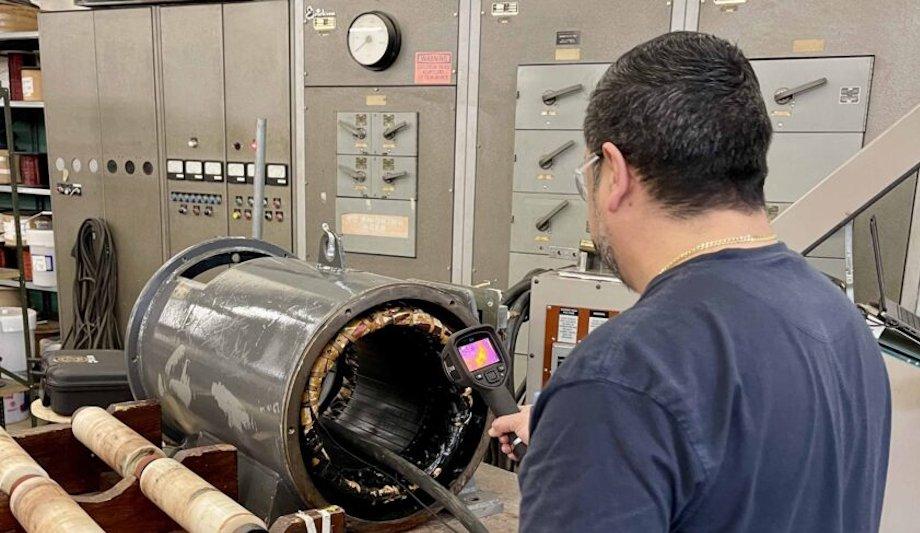
During core loss testing, technicians apply a specific voltage to the motor and measure the resulting current, allowing them to calculate the core losses under various operating conditions. This testing is essential for identifying potential issues, such as overheating, insulation degradation, or structural damage within the core, which can adversely affect the motor’s efficiency and reliability.
By conducting core loss testing, technicians can ensure that the motor operates at optimal performance levels, thereby extending its lifespan and reducing energy consumption.
Distortion of the core
Distortion of the core and the presence of hot spots in an electric motor can significantly impact its efficiency
Distortion of the core and the presence of hot spots in an electric motor can significantly impact its efficiency and overall performance.
Core distortion, often caused by uneven heating or excessive temperatures during processes like burnout oven stripping, can lead to misalignment of laminations and structural irregularities within the core material.
Distortion disrupts the magnetic circuit
This distortion disrupts the magnetic circuit essential for motor operation, resulting in increased core losses and reduced magnetic efficiency. Hot spots, localized areas of overheating within the core, can further exacerbate efficiency issues by causing thermal stress, insulation breakdown, and potential damage to the core material.
These hot spots create inefficiencies in the motor’s operation, leading to energy losses, decreased power output, and compromised reliability.
MotorSafe Stripping method
At Dreisilker, they utilizing the MotorSafe Stripping method to safely remove motor windings during a repair. Through proper temperature control, insulation removal techniques, and post-stripping inspections is crucial to maintaining optimal motor efficiency and performance.
During the repair, if they find that the motor’s core has hot spots, they consult their customers on whether it is recommended to replace the core. Overall, core loss testing is a critical diagnostic tool in electric motor repair. By testing and addressing core losses, one can ensure the reliability, efficiency, and longevity of electric motors, ultimately leading to cost savings and improved performance.