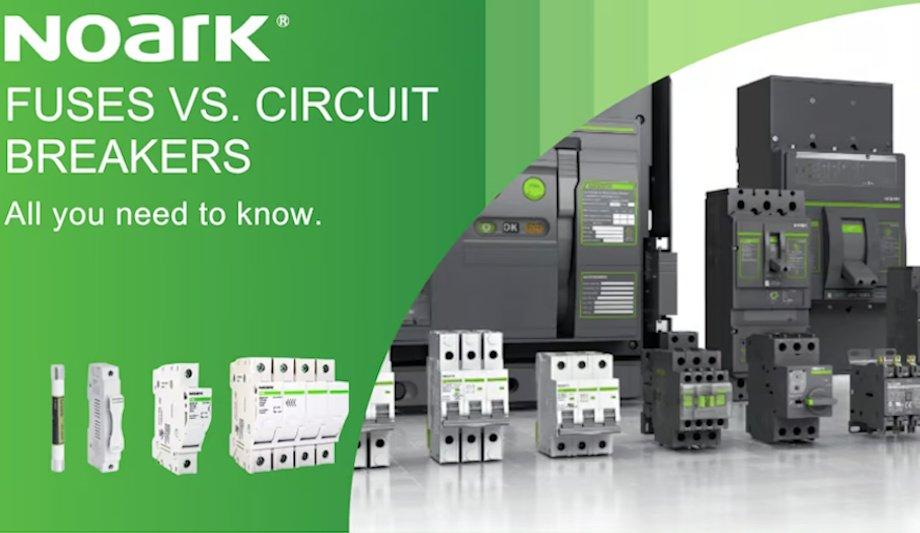
Ensuring electrical safety is a vital component of modern infrastructure across various environments, with protection from overloads and short circuits being paramount.
Two key devices, fuses and circuit breakers, are designed to fulfill this essential role by safeguarding electrical networks, mitigating risks, and ensuring safe operations.
Understanding Fuses and Circuit Breakers
Fuses are straightforward devices used to protect circuits from excessive currentFuses are straightforward devices used to protect circuits from excessive current. Consisting of a thin metal wire or strip, fuses melt when the electrical current surpasses a certain threshold.
Commonly found in household appliances, electrical panels, and automotive systems, fuses interrupt the flow of electricity upon detecting a fault, thereby preventing potential damage.
Circuit Breakers, on the other hand, are advanced protective devices that automatically halt electrical flow during overloads or short-circuit events. Available in various types for specific uses, they include:
- Miniature Circuit Breakers (MCB): Designed for low-current systems in residential and commercial spaces, offering protection against overloads and short circuits.
- Molded Case Circuit Breakers (MCCB): Used in mid-sized current applications, typically up to 2000A, they ensure safety by interrupting circuits when excess current is detected.
- Air or Power Circuit Breakers (ACB): Suitable for large load current applications up to 6000A, using pressurized air or insulating gases for quick circuit interruption.
The primary distinction between fuses and circuit breakers is that circuit breakers can be reset after tripping, providing comprehensive protection and enabling rapid restoration of electrical connections.
Pros and Cons of Fuses
Fuses offer both advantages and disadvantages, influencing the decision-making process between using fuses or circuit breakers.
Pros:
- Low Cost: Ideal for budget-conscious installations, as fuses are typically cheaper than circuit breakers.
- Fast Response Time: React quickly to electrical faults, providing immediate overcurrent protection.
- Simple Design: The absence of moving parts reduces the likelihood of mechanical failures.
Cons:
- Single-Use: Fuses require replacement after each fault, necessitating a stock of spares.
- Limited Protection: Less effective in handling complex electrical systems and advanced power needs.
Pros and Cons of Circuit Breakers
Circuit breakers present a more modern approach to electrical protection, reflecting the evolving need for safe operations.
Pros:
- Reusability: Circuit breakers can be reset without replacement, offering immediate power restoration.
- Simple Maintenance: Easier to operate and manage, reducing technical complexity.
- Advanced Safety Features: Options like Ground Fault Circuit Interrupter (GFCI) and Arc Fault Circuit Interrupter (AFCI) provide comprehensive protection.
Cons:
- Higher Initial Cost: More expensive than fuses, though they offer excellent long-term value.
- Slightly Slower Response: Have a marginally slower reaction time than fuses.
- Periodic Maintenance: Requires regular testing and recalibration, impacting long-term operational costs.
Choosing Between Fuses and Circuit Breakers
The decision between fuses and circuit breakers hinges on specific requirements and environments. Understanding the electrical setup guides the appropriate selection.
Homeowners
In modern residential contexts, cost and convenience are considerations. While fuses are cheaper initially, circuit breakers provide better long-term value, offering reset capabilities and enhanced safety features, alongside GFCI options. These factors make them desirable for homeowners valuing safety and convenience.
Industrial and Commercial Use
For complex systems, reliable protection is essential. Circuit breakers offer superior solutions with sophisticated safety mechanisms suitable for industrial settings with high-power equipment. Their reusability and advanced features ensure minimal downtime and continuous operations, preventing financial losses and enabling precise monitoring and diagnostics.
Conclusion
Understanding the distinctions between fuses and circuit breakers is key to ensuring effective electrical safety. Despite both serving protective functions, they vary significantly in design, cost, reusability, and application complexity. Circuit breakers offer the versatility and advanced features critical for many settings.
Electrical safety is critical to modern infrastructure in various settings. Protection from overloads and short circuits is essential.
Two primary devices serve this crucial purpose: fuses and circuit breakers. These components offer effective protection for electrical networks. They prevent potential hazards and ensure safe electrical operations.
What Are Fuses and Circuit Breakers?
Fuses are simple devices. They are designed to protect circuits from excessive current. They feature a thin metal wire or strip. It melts when electrical current exceeds a specific threshold. Fuses are commonly used in various settings like household appliances and electrical panels. Automotive electrical systems also use them. When a fault occurs, the wire breaks, interrupting the electrical flow and preventing potential damage.
Circuit breakers are more advanced electrical and circuit protection devices. They automatically interrupt the electrical flow when overloads or short-circuit conditions occur. They come in various types, each suited to specific applications:
- Miniature Circuit Breakers (MCB): These devices are designed for low-current systems in residential and commercial setups. They protect against overloads and short circuits.
- Molded Case Circuit Breakers (MCCB): These devices are low-voltage circuit breakers, used to protect wiring and electrical equipment by interrupting electric circuits automatically when excess current is detected. They are used in mid-size current applications, generally up to 2000A.
- Air or Power Circuit Breakers (ACB): These devices protect larger-voltage systems by employing pressurized air or insulating gases to instantly interrupt tripping circuits within milliseconds. They are used in large load current applications up to 6000A
The ability to reset is the main ‘fuse vs circuit breaker difference’. You can reset a circuit breaker after it trips. They provide comprehensive protection and the ability to quickly restore electrical connections.
Pros and Cons of Fuses
Fuses, like any technology, come with their own set of advantages and limitations. Understanding their pros and cons helps with fuse vs circuit breaker decision-making.
Pros
- Low Cost: Fuses are generally cheaper than circuit breakers. Ideal for budget-conscious installations.
- Fast Response Time: They react quickly to electrical faults (less than one quarter of a cycle) and provide immediate protection against overcurrents.
- Simple Design with No Moving Parts: This is a key difference between a circuit breaker and a fuse. No moving parts of fuses means fewer potential mechanical failures.
Cons
- Need Replacement After Every Fault: This is a primary fuse vs circuit breaker difference and a major fuse con. You need to replace it every time it blows.
- Not Reusable: A fuse is a single-use protection device. Hence, you may need to have a constant stock of spare fuses.
- Limited Protection: Fuses are less effective in complex electrical systems. They are not designed to handle sophisticated power requirements.
Pros and Cons of Circuit Breakers
Circuit breakers are a more modern electrical protection approach. The fuse vs circuit breaker comparison highlights how their design reflects the evolving need for electrical safety.
Pros
- Reusable After Tripping: This is a primary fuse vs circuit breaker difference and a major pro of using circuit breakers. They can be easily reset without replacement and offer immediate restoration of power.
- Easier Maintenance: Circuit breakers are simple to operate and manage. This reduces technical complexity.
- Advanced Safety Features: Options like Ground Fault Circuit Interrupter (GFCI) and Arc Fault Circuit Interrupter AFCI are available to provide comprehensive electrical protection.
Cons
- Higher Upfront Cost: Cost is another major fuse vs circuit breaker difference. Circuit breakers are more expensive than traditional fuses. The initial investment is substantial, but they offer excellent value for money.
- Slightly Slower Response Time: They are marginally less rapid than fuses. Their slower response time translates to a microsecond difference in fault detection.
- Requires Periodic Maintenance: Circuit breakers require regular testing and protection recalibration. This key difference between a circuit breaker and a fuse may add to long-term operational costs.
Which is Best for their Needs?
The fuse vs circuit breaker selection depends on specific requirements and the environment. Understanding the electrical setup helps make the most suitable selection.
For Homeowners
Modern residential settings typically prioritize cost and convenience. Cost is a key difference between a circuit breaker and a fuse. While fuses are relatively cheaper upfront, circuit breakers offer better long-term value despite higher initial costs. Their ability to be reset and additional safety features make them more attractive. They are also suitable for homeowners seeking solutions that provide peace of mind.
Safety is also a top priority for homeowners. They benefit from circuit breakers’ advanced protection, especially with GFCI options that protect against ground faults. The convenience of simply flipping a switch after a trip outweighs the cost difference.
For Industrial and Commercial Use
Complex electrical systems demand reliable protection and safety. Circuit breakers provide more comprehensive safety mechanisms for complex networks. Large-scale industrial environments require sophisticated electrical management strategies. These settings often involve high-power equipment and precise electrical control requirements.
Industrial environments require consistent performance and minimal downtime. Circuit breakers’ reusability and advanced protective features make them an ideal choice. They are more suitable for maintaining continuous operations. They help prevent production interruptions and potential financial losses. They also offer more precise monitoring and diagnostic capabilities.
Conclusion
Understanding the fuse vs circuit breaker differences is crucial for effective electrical safety. While both serve protective functions, they differ significantly in design, cost, reusability, and application complexity. Overall, circuit breakers offer more versatility and advanced features, making them a preferred choice in various settings.
At NOARK Electric, they provide reliable electrical protection solutions. Visit the website to browse the product range and Essential Components Catalog. For a quick overview of the LV products, please download the LV Products Line Card.