Engineers working in machine design must thoroughly understand how power transformers function to ensure equipment operates within proper voltage ranges.
This knowledge is crucial as these machines interact with electrical systems, necessitating the design of appropriate voltage and current levels to prevent device malfunctions and ensure safety.
Transformer Ratings and Applications
For engineers to optimize machinery performance and safety, it is vital to select suitable transformer types and ratings for specific uses. Understanding the interface of designed equipment with electrical systems involves knowing voltage and current details to avoid failures.
Strategic placement of transformers within power grids maximizes safety and effectiveness, preventing resource wastage and safeguarding lives.
Importance of Power Transformers in Electrical Grids
Power transformers are critical components in electrical grids, facilitating the reliable transmission
Power transformers are critical components in electrical grids, facilitating the reliable transmission and distribution of electricity over long distances.
By adjusting voltage levels, these transformers ensure efficient power movement, stepping up or down as necessary for both long-distance high-voltage transmission and safe residential or industrial delivery.
Understanding Power Transformer Operations
A power transformer functions as a static electrical device, transferring energy between circuits based on electromagnetic induction principles. It typically consists of coils of wire linked by a magnetic core, adjusting voltage levels effectively for power distribution.
Every power transformer uses two primary coil types: primary and secondary windings, wrapped around a central laminated iron core composed of silicon steel sheets.
Characteristics and Components
The core and coils are housed in a steel tank filled with protective oil to cool and protect during process
An iron core within power transformers concentrates and directs magnetic flux induced by current flow through the coils. The core and coils are housed in a steel tank filled with insulating oil to cool and insulate during operation.
Essential components such as bushings, tap changers, and protective gauges are required for small and mid-sized units. In contrast, larger power transformers may need advanced cooling and monitoring based on specific needs and requirements.
Operational Mechanics of Power Transformers
Power transformers rely on electromagnetic induction, where a changing magnetic field in one coil generates voltage in a nearby coil. When alternating current flows in the primary coil, a varying magnetic field is produced, inducing voltage in the secondary coil.
The induced voltage depends on coil turns, allowing for voltage step-up or step-down. This transformed voltage becomes suitable for further transmission or distribution.
Applications of Power Transformers
Transformers find applications across various environments based on voltage demands
Transformers find applications across various environments based on voltage demands. Within substations, step-up transformers increase voltage for long distances, while step-down transformers prepare power for local distribution.
Specialized transformers in copper mines prevent explosions by handling challenging conditions. In power plants, transformers adjust generated power to match transmission standards for efficient energy transfer.
Case Studies and Examples
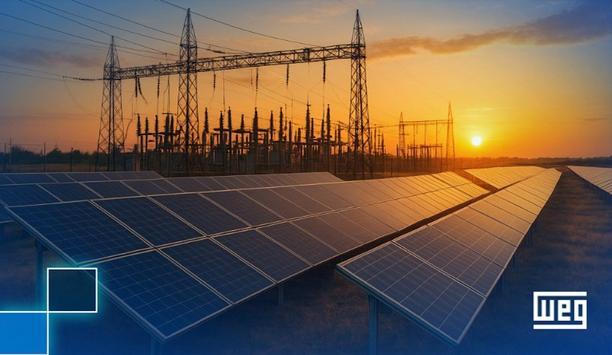
Pivotal power projects, such as the Puerto Peñasco photovoltaic power station in Mexico, utilize transformers like the 115 KV transformers, with PV modules and energy storage systems, illustrating transformers' role in renewable energy infrastructure.
These transformers adeptly manage voltage levels to support the national power grid.
Range of Usage
Power transformers cover a spectrum of voltage grades, crucial for the specific demands of power systems
Power transformers cover a spectrum of voltage grades, crucial for the specific demands of power systems, ranging from medium to extra-high voltage.
These can include 36kV to 750kV natural ester oil-filled transformers for large-scale transmission and 36kV to 1000kV mineral oil-filled transformers for industrial and renewable energy use, all key to delivering power efficiently across vast distances worldwide.
Maintaining Efficiency and Safety in Power Transmission
The presence of power transformers is essential globally for efficient, safe electricity transmission.
Their capacity to adjust voltages facilitates long-distance energy transfers and ensures that power reaches end-users at suitable voltage levels, underscoring their importance in the energy sector.
Design engineers should know how transformers work so they can design machinery that operates optimally within the proper voltage ranges.
Because the equipment that these engineers design will interface with electrical systems, they need to know the correct voltage and current levels to prevent malfunctions or damage and ensure safety.
Ratings for specific applications
It is important for machine design engineers to understand how transformers work so they can design machinery that operates optimally within the proper voltage ranges, as well as select the right transformer types and ratings for specific applications.
Because the equipment that these engineers design will interface with electrical systems, they also need to know the correct voltage and current levels to prevent malfunctions or damage. Most importantly, the placement of transformers within power grids maximizes effectiveness and safety, preventing loss of life and valuable resources.
reliable transmission and distribution of electricity
Power transformers are essential components in electrical grids, ensuring the reliable transmission and distribution of electricity across vast distances. Their strategic positioning within the grid is designed to optimize the efficiency of power delivery.
These transformers play a critical role in adjusting voltage levels, either stepping them up or down to suitable levels. This is necessary for both the long-distance transmission of power at high voltages and for reducing voltage to safe levels for residential and industrial use.
Deep Dive into a Power Transformer
A power transformer is a static electrical device that transfers electrical energy between circuits without any moving parts. It operates based on the principle of electromagnetic induction, efficiently adjusting voltage levels for power distribution and transmission. A typical power transformer consists of two or more coils of wire connected by a shared magnetic core.
The device commonly contains two wire coils: the primary winding and the secondary winding. These coils are wrapped around a central laminated iron core made of stacked silicon steel sheets.
The iron core serves to concentrate and direct the magnetic flux generated by the current passing through the coils. The transformer’s active part consisting of core and coils is housed in a steel tank filled with insulating oil, which cools and insulates the device during operation.
Essential for proper functioning
Regular components, such as bushings, tap changers, measurement and protection gauges, are essential for proper functioning, reliability and safety of most small and mid-size units. Other than this, enhanced monitoring, cooling and protection systems may be required for large-sized power transformers based on customer needs and system requirements.
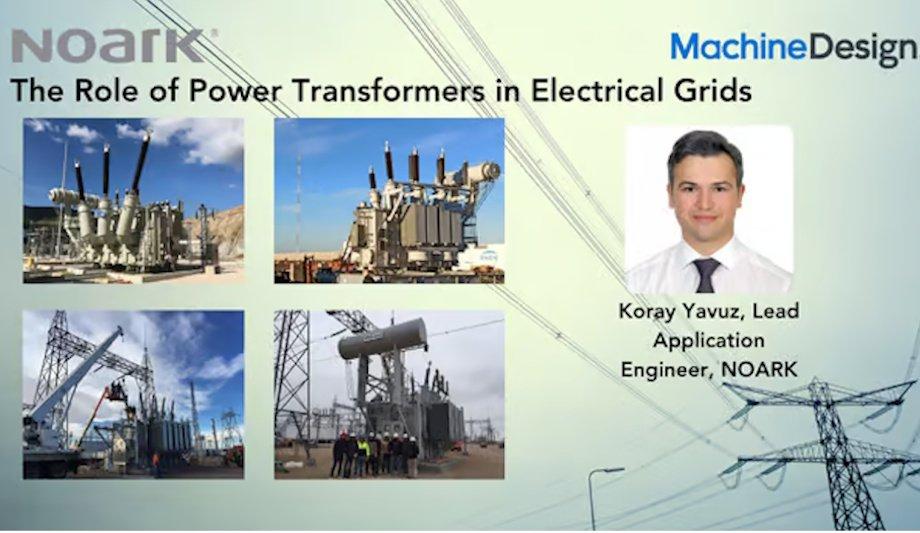
The 525 kV 525 MVA oil-immersed power transformer is a super high voltage class, large capacity 3-phase autotransformer in deployment in the United States to keep the power grid up and running.
Inner Workings of a Power Transformer
Power transformers operate based on the principle of electromagnetic induction: A changing magnetic field in one coil induces a voltage in another coil located near it.
Specifically, when alternating current flows through the primary coil, it creates a fluctuating magnetic field within the iron core, which induces a voltage in the secondary coil wrapped around the same core.
Here’s a breakdown of the process inside a power transformer:
- Current flow. An alternating current flows through the primary coil, generating a changing magnetic field around the transformer’s iron core.
- Magnetic field variation. As the alternating current cycles, the magnetic field inside the core expands and collapses, following the AC’s rhythm.
- Induced electromotive force. This fluctuating magnetic flux passes through the secondary coil, inducing an electromotive force (EMF) in the coil due to the changing magnetic field, as per Faraday’s law of induction.
- Voltage adjustment. The induced voltage in the secondary coil depends on factors such as the rate of magnetic flux change and the number of turns in the coils. By varying the number of turns in the coils, the voltage can be stepped up or down according to the transformer’s turn ratio.
- Transmission. The transformed voltage is then ready for distribution or further transmission after passing through the secondary winding.
Powerful Applications
Power transformers are used in various scenarios depending on the voltage requirements. They play an important role in ensuring efficient electricity delivery over long distances. Some common applications include:
- Substations. Transformers in substations are crucial for voltage regulation. Step-up transformers increase voltage for long-distance transmission, while step-down transformers, located in Primary-to-Secondary substations, reduce it for local distribution to homes and businesses. Additionally, they provide electrical isolation between different voltage levels to enhance system reliability.
- Copper mines. Specialized transformers are used in copper mines to prevent explosions in hazardous underground environments. They are typically robust and designed to operate in harsh environmental conditions such as high humidity, dust and temperature variations. These transformers have protective enclosures to prevent electrical arcing from igniting potentially explosive gases.
- Power plants. In thermal and hydroelectric plants, power is generated at a voltage that may not match transmission standards. Generator step-up transformers adjust these voltages to proper levels for efficient transmission through power lines. These large-sized units are sophisticated equipment to handle large loads and ensure the generated power is transferred to the transmission grid without overloading or voltage instability.
Puerto Penasco’s photovoltaic power station in Mexico’s National Power Electric Utility delivers supporting power equipment for new energy with 115 KV transformers, 158 MW PV modules, and 12 MW/24 MWh ESS.
Voltage Ranges
Power transformers come in a range of voltage levels, from medium to extra-high voltage, based on the specific needs of the power system they serve.
- 36kV ~ 750kV, up to 1000MVA natural ester oil-filled power transformers. For high-capacity, long-distance transmission lines, often spanning countries or continents for efficient power delivery.
- 36kV ~ 1000kV, up to 1200MVA mineral oil-filled power transformers. For ultra-high capacity, ideal for power generation plants, substations, industrial facilities, and renewable energy installations.
Efficient and safe transmission of electricity
Power transformers are necessary for the efficient and safe transmission of electricity worldwide. Their ability to step up or step down voltage enables long-distance power delivery and ensures that electrical power reaches end users at appropriate levels.
Understanding their operation, applications and specifications is essential for professionals in the energy sector.