It is increasingly important to understand how decisions impact the environment and energy consumption in everyday life. These decisions are also important when they are selecting the electric motor repair partner.
Understanding the different methods of electric motor repair and how they impact the electric motor’s efficiency and reliability is crucial. In this article, they will walk them through how the burnout oven electric motor repair process impacts the motors and review how Dreisilker’s MotorSafe Repair method differs.
What is the burnout oven electric motor repair process?
The intense heat effectively turns the insulation and varnish materials on the windings into ash
The burnout stripping method is a long-established technique utilized in the repair of electric motors to remove insulation and varnish from stator windings in preparation for rewinding. This process involves placing the stator in a specialized oven set to a high temperature, typically around 650°F, for an extended period, often exceeding eight hours.
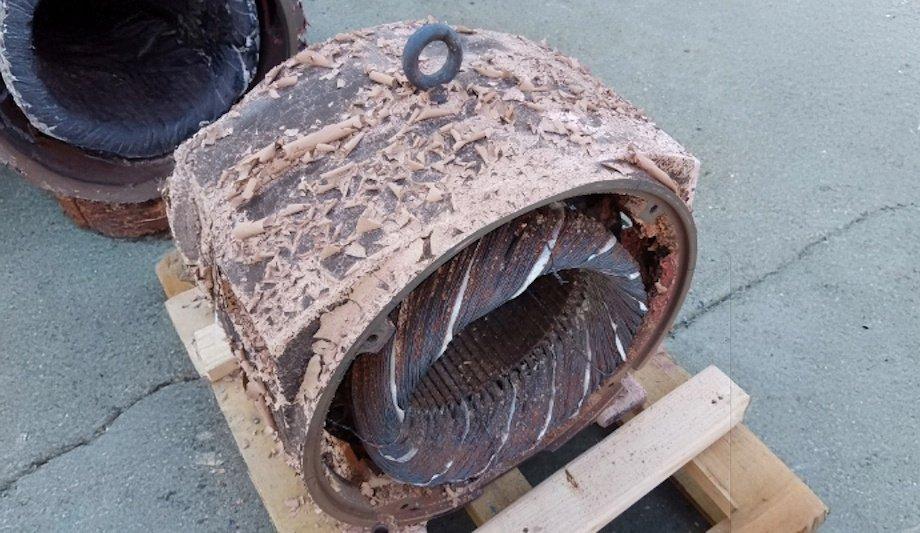
The intense heat effectively turns the insulation and varnish materials on the windings into ash, facilitating their complete removal. While this method is highly effective in preparing the stator for the application of new windings, it carries potential risks and challenges.
These include possible damage to the stator core and frame from excessive heat, environmental concerns due to the release of gasses and byproducts, significant energy consumption, and the generation of waste materials that require proper disposal.
How core integrity impacts electric motor efficiency
The core of an electric motor plays a fundamental role in its operation, serving as the foundation for the stator windings and providing the magnetic circuit necessary for converting electrical energy into mechanical motion. Core integrity is paramount in ensuring the motor’s reliability, efficiency, and longevity.
Issues with the core can lead to increased core losses, reduced power output, limited lifespan
The core, typically made of stacked laminations of electrical steel, must maintain its structural integrity to support the magnetic flux generated during motor operation.
Any damage or distortion to the core, whether from improper stripping methods or other factors, can compromise the motor’s performance. Issues with the core can lead to increased core losses, reduced power output, limited lifespan, and decreased overall efficiency.
Electric motor repair and maintenance
To maintain optimal motor performance, core loss testing is a critical aspect of electric motor repair and maintenance. This process involves assessing the core losses in the stator core to evaluate the motor’s efficiency and performance. By measuring core losses, which include hysteresis and eddy current losses within the core material, technicians can identify any abnormalities or damage that may have occurred during the repair process, such as stripping and rewinding.
Core loss testing ensures that the motor operates within optimal efficiency levels
Core loss testing ensures that the motor operates within optimal efficiency levels and can detect issues like core overheating, insulation breakdown, or structural damage.
Conducting thorough core loss testing as part of the repair procedure allows technicians to verify the integrity of the stator core and make informed decisions regarding any necessary corrective actions to maintain the motor’s efficiency and longevity.
The use of the burnout oven motor repair method
One of the critical factors affecting core integrity during the burnout oven process is temperature control. Excessive temperatures can lead to thermal stress and damage to the stator core and frame. It is essential to adhere to recommended temperature settings (around 650°F) and duration to prevent overheating and potential core damage.
If they are working with a repair shop that utilizes the burnout method, it is important to inquire about their quality procedures for temperature control.
Through the many years of experience, they have found that many repair shops may ignore the 650°F guideline and increase the temperature to expedite the process. While this might speed up the turnaround time, it can also negatively impact the motor’s efficiency.
Disruption of the magnetic circuit
Another significant review is the potential for core distortion and hot spots within the motor
Another significant consideration is the potential for core distortion and hot spots within the motor. Core distortion, often caused by uneven heating or excessive temperatures during the burnout process, can lead to misalignment of laminations and structural irregularities within the core material.
This disruption of the magnetic circuit, essential for motor operation, results in increased core losses and reduced magnetic efficiency. Additionally, hot spots—localized areas of overheating—can further exacerbate efficiency issues by causing thermal stress, insulation breakdown, and potential damage to the core material.
These inefficiencies lead to energy losses, decreased power output, and compromised reliability. Therefore, careful management of the burnout stripping process is crucial to minimize these risks and ensure optimal motor performance.
Alternatives to the burnout oven
Recognizing the challenges and environmental concerns associated with the burnout oven method, Dreisilker has developed an alternative solution known as the MotorSafe Repair process. In a comprehensive study, they compared the burnout oven method with the MotorSafe approach, highlighting the significant advantages of the method in terms of both performance and environmental impact.
The MotorSafe Repair process prioritizes the protection of core integrity, minimizes energy consumption, and reduces the release of harmful emissions. In the following sections, they will delve into the specifics of the MotorSafe Repair process, discuss the study’s findings, and explore the environmental benefits that make MotorSafe a superior choice for electric motor repair.
Additionally, they will refer to an article that further explains how the MotorSafe method positively impacts the environment, underscoring the commitment to sustainability and efficiency in motor repair.