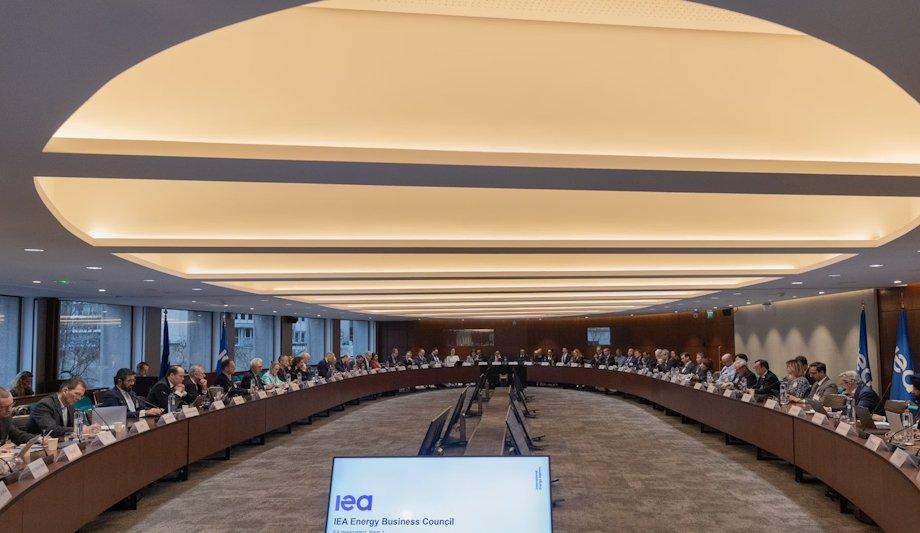
The International Energy Agency (IEA) convened a significant gathering of energy sector leaders to deliberate on recent trends in the oil and gas markets, critical mineral supply chains, and the escalating demand for electricity.
Hosted under the banner of the Energy Business Council (EBC), this meeting facilitated valuable dialogue between the IEA and the private sector, aiming to exchange essential data and insights to bolster the Agency’s recommendations for robust and secure global energy systems.
Oil and Gas Market Developments
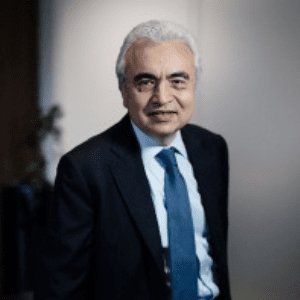
Commencing the discussions, IEA Executive Director Dr. Fatih Birol emphasized the indispensable role of the private sector in addressing current energy challenges. “The private sector has a vital role to play in tackling the challenges facing the energy sector today. This is our opportunity for a candid exchange on how industry and governments can work together constructively,” he stated.
With over 70 senior executives and notable figures like entrepreneur and former US Secretary of Energy Dan Brouillette in attendance, the session provided a comprehensive overview of oil and gas market movements, assessing supply sufficiency amidst a complex geopolitical context.
Strengthening Cooperation
Key discussions revolved around the security of supply chains and their broader economic impacts
Key discussions revolved around the security of supply chains and their broader economic impacts. The participants examined strategies to reinforce collaboration between nation-specific energy importers and exporters and scrutinized recent policy adjustments that might alter industry approaches.
A second major focus was the future of critical minerals, highlighting the surge in copper demand driven by electrification advances. Industry leaders shared practical strategies to diversify mineral sources and enhance recycling strategies to secure mineral supply.
Age of Electricity
Afternoon discussions honed in on the advent of what the IEA refers to as the Age of Electricity, detailed in their World Energy Outlook 2024.
This segment scrutinized electricity generation trends and the integration challenges posed by various power sources, including nuclear and geothermal energy. The discourse included the growth trajectories of solar photovoltaic systems and wind power, while also acknowledging the persistent roles of natural gas and coal.
Maintaining System Stability
The final discussions addressed the critical task of aligning electricity supply with the burgeoning demand. Industry leaders tackled ongoing obstacles impeding infrastructure projects, such as transformer and labor shortages, alongside regulatory hurdles that stymie grid expansion efforts.
Solutions for maintaining system stability were explored, focusing on the integration of renewable sources and the application of battery technologies. The participants underscored the urgency for synchronized efforts between industry leaders and policymakers to navigate the rapid technological changes transforming the global energy landscape.
The International Energy Agency welcomed business pioneers from across the energy sector and beyond to discuss recent developments in oil and gas markets, critical mineral supply chains, and how to navigate the accelerating growth in electricity demand.
The Energy Business Council (EBC) serves as an important platform for dialogue between the IEA and the private sector, facilitating the exchange of crucial data and expertise that inform the Agency's analysis and recommendations for advancing reliable and secure energy systems worldwide.
Oil and gas market developments
IEA Executive Director Dr Fatih Birol, who opened and chaired the meeting, said: “The private sector has a vital role to play in tackling the challenges facing the energy sector today. This is our opportunity for a candid exchange on how industry and governments can work together constructively.”
The meeting – which brought together more than 70 senior executives from major companies, as well as entrepreneur and former US Secretary of Energy Dan Brouillette – began with an overview of oil and gas market developments, examining supply adequacy and emerging risks in an increasingly uncertain geopolitical landscape.
Strengthening cooperation
Discussions centered on risks to supply chain security and its implications for economic outlooks
Participants explored approaches for strengthening cooperation between importing and exporting countries, while assessing how recent policy shifts might influence industry strategies.
The second session addressed the outlook for critical minerals, with a particular emphasis on how accelerating electrification is driving a surge in copper demand.
Discussions centered on risks to supply chain security and its implications for economic outlooks and clean energy technologies. Industry pioneers shared pragmatic approaches for diversifying supplies and enhancing recycling capabilities to strengthen mineral security.
Age of Electricity
The afternoon sessions focused on the theme of the approaching Age of Electricity that the IEA highlighted in its recent World Energy Outlook 2024. Participants examined trends in electricity generation and system integration challenges.
The first part of the discussion analyzed the roles of various power sources, including nuclear power and geothermal energy. Discussions covered the trajectories of solar PV and wind deployment, while also considering the ongoing roles of natural gas and coal in the energy mix.
The final session tackled the crucial challenge of matching electricity supply with demand. Industry pioneers addressed persistent bottlenecks affecting infrastructure projects, including transformer shortages, labor shortages, and administrative barriers that have impacted grid expansion.
Maintaining system stability
The discussion explored solutions for maintaining system stability with increasing integration of renewable power sources and the deployment of batteries. Participants also evaluated the pace of implementation of demand-side management and digital solutions.
Throughout the discussions, participants emphasized the need for coordinated action between industry and policy makers to address these challenges, particularly as the global energy system undergoes significant technological changes.