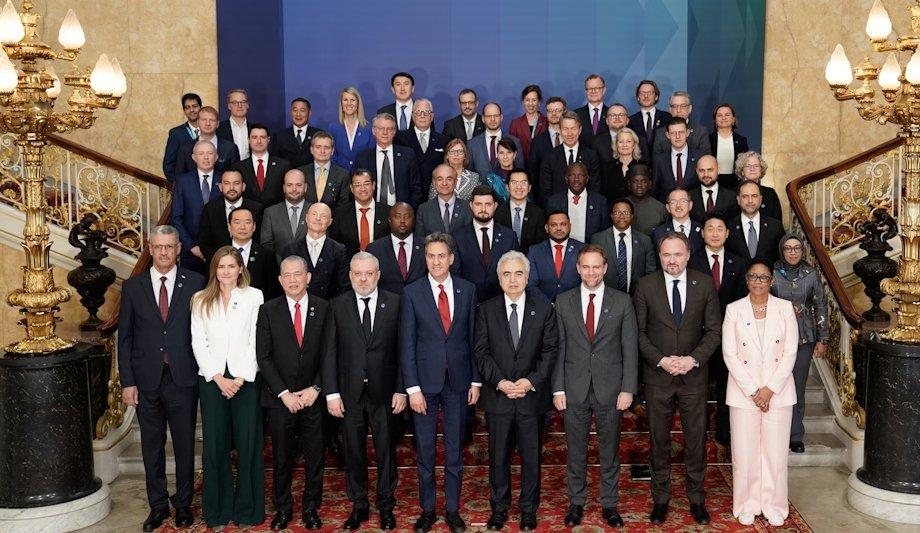
The Future of Energy Security Summit 2023 wrapped up at Lancaster House in London, signaling a strong commitment to international collaboration in managing the evolving landscape of global energy security.
Co-hosted by the International Energy Agency (IEA) and the UK Government, the two-day event united representatives from 60 nations, over 50 major energy companies, and several international and civil society organizations to address the pressing issue of securing current and future energy systems.
Keynote Addresses at the Summit
The Summit featured notable keynote addresses from UK Prime Minister Keir Starmer and European Commission President Ursula von der Leyen.
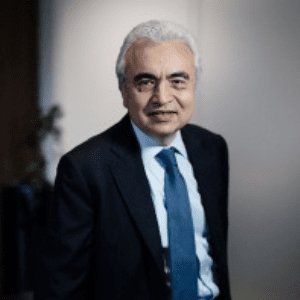
Held amidst increasing geopolitical tensions, rising energy demand, and rapid technological advancements, the event aimed to re-evaluate and reshape energy security strategies in a swiftly changing world. The initiative was co-chaired by UK Secretary of State for Energy Security and Net Zero Ed Miliband and IEA Executive Director Fatih Birol.
Adapting to Global Challenges
IEA Executive Director Fatih Birol emphasized the Summit's role in adapting to today's geopolitical and economic challenges, noting, "This Summit has demonstrated that while the nature of energy security is evolving, the need for international cooperation remains constant." The discussions highlighted a collective understanding that solutions will be more effective when driven collaboratively.
Focus on Collective Energy Security
Ed Miliband commented, "This week, alongside the International Energy Agency, we brought together 60 governments from around the world, as well as sector leaders, for the first major global summit on clean energy as energy security."
The UK announced a significant investment of £300 million to support offshore wind supply chains and plans to create 2,000 jobs in carbon capture network development as part of its Plan for Change.
Expanding the Energy Security Definition
Participants acknowledged that traditional energy security approaches must be broadened
Participants acknowledged that traditional energy security approaches must be broadened. Beyond ensuring secure oil and gas supplies, the focus must now include aspects like cybersecurity, resilience against extreme weather events, and the stability of supply chains for critical minerals and clean technologies.
Holistic Approach to Energy Security
The Chairs’ Summary highlighted the necessity for a "holistic approach to energy security," noting that clean technologies such as wind, solar, nuclear, and battery storage are rapidly being implemented. These technologies aim to reduce reliance on fossil fuels and provide consumer protection from price instability.
Addressing Energy Access and Affordability
Energy access and affordability were identified as crucial to both national and global security. With about 700 million people lacking electricity and over 2 billion without access to clean cooking, addressing energy poverty emerged as a critical issue. Affordability concerns are also rising in advanced economies, notably impacting low-income households.
Transitioning to Clean Energy
The Summit underscored the importance of a fair and just transition to clean energy
The Summit underscored the importance of a fair and just transition to clean energy. Although fossil fuels are likely to remain part of the energy mix for some time, participants emphasized responsible management, including investment in emissions reduction, infrastructure decommissioning, and workforce retraining.
Technological advancement was a significant point of discussion, focusing on the potential of AI and analytics in enhancing forecasting, efficiency, and resilience. The vulnerability of energy infrastructure to cyber threats was also highlighted, stressing the need for robust regulatory frameworks and international cooperation.
Electrification and Power Grid Security
The growing role of electricity, particularly in sectors like transport and heating, was emphasized. Participants called for policy frameworks that support flexible generation and storage, demand-side responses, and regional interconnections. Without strategic grid expansion, efforts to scale clean power risk being impeded.
Implications of Clean Energy Supply Chains
Attention was drawn to the geopolitical and economic implications of clean energy supply chains. The complexities of mining, processing critical minerals, and manufacturing solar panels and wind turbines were discussed, highlighting opportunities for industrial development alongside the risks of reliance on concentrated suppliers.
The Summit on the Future of Energy Security concluded at Lancaster House in London with a strong signal of renewed international cooperation and resolve.
Co-hosted by the IEA and the UK Government, the landmark two-day event brought together decision makers from 60 governments and over 50 major energy companies, alongside international institutions and civil society organizations, to confront a major global challenge: securing the energy systems of today and tomorrow.
Keynote speeches
The Summit was a unique international event, bringing together a diverse range of countries and businesses
With keynote speeches from UK Prime Minister Keir Starmer and European Commission President Ursula von der Leyen, the Summit was a unique international event, bringing together a diverse range of countries and businesses.
Convened at a time of heightened geopolitical uncertainty, rising energy demand and accelerating technological change, the event provided a platform to reassess and reframe energy security in a rapidly transforming world.
It was co-chaired by UK Secretary of State for Energy Security and Net Zero Ed Miliband and IEA Executive Director Fatih Birol.
Challenging geopolitical and economic times
“In challenging geopolitical and economic times, this Summit has demonstrated that while the nature of energy security is evolving, the need for international cooperation remains constant,” said IEA Executive Director Fatih Birol.
“What emerged from our discussions was not only a shared understanding of the challenges ahead, but a recognition that the solutions – whether technical, political, or financial – will be more effective if pursued together.”
“This Summit has made it clear for the world that we are in a new era of energy security – and the IEA will build on its decades of leadership by continuing to spearhead international efforts to ensure secure, affordable and sustainable energy supplies for all.”
Collective energy security
"This week, alongside the International Energy Agency, we brought together 60 governments from around the world, as well as sector leaders, for the first major global summit on clean energy as energy security,” said UK Secretary of State for Energy Security and Net Zero Ed Miliband.
“We have discussed how to drive our collective energy security, and here in the UK we have announced a £300 million boost for offshore wind supply chains through Great British Energy and finalized a major deal to deliver 2,000 skilled jobs to build a carbon capture network, through our Plan for Change.”
“In a changing and uncertain world, Britain is determined to strengthen our alliances and double down on our commitment to multilateralism and this week's discussions will set strong foundations so we can rise to the challenges of the years ahead.”
Future of energy security
Participants agreed that the future of energy security must also encompass newer dimensions
The Summit opened with a clear recognition that energy security can no longer be understood solely in terms of traditional risks.
While safeguarding oil and gas supplies and maintaining emergency response mechanisms remain critical, participants agreed that the future of energy security must also encompass newer dimensions such as cybersecurity, extreme weather events, supply chain resilience for critical minerals and clean technologies, and integration of electrified and decentralized systems.
Holistic approach to energy security
The Chairs’ Summary emphasized the need for a “holistic approach to energy security”, highlighting the overlapping pressures that are reshaping the global energy system.
Clean technologies – such as wind, solar, nuclear, and battery storage – are being deployed at unprecedented speed, helping to reduce reliance on fossil fuel imports and protect consumers from price volatility, the summary noted.
Importance of energy access and affordability
Participants at the Summit emphasized the importance of energy access and affordability
Participants at the Summit emphasized the importance of energy access and affordability as fundamental to national and international security.
With nearly 700 million people worldwide still lacking electricity and over 2 billion without access to clean cooking, addressing energy poverty was highlighted throughout the Summit as a key challenge to overcome.
Delegates acknowledged that affordability concerns are growing even in advanced economies, where low-income households are disproportionately affected by energy costs.
Transitions to clean energy
Moreover, many Summit participants underscored that transitions to clean energy must be just and fair. Fossil fuels will likely remain part of the energy mix for years to come, particularly in sectors where alternatives remain limited, the Chairs’ Summary noted.
Participants stressed the importance of responsible management of resources, including continued investment in emissions reductions across oil and gas supply chains, decommissioning of ageing infrastructure, and reskilling of workforces.
Support for regions and communities that risk being left behind in the shift to new technologies and industries was frequently stressed.
Technology and innovation
At the same time, participants flagged the growing exposure of critical infrastructure to cyber threats
Technology and innovation featured prominently in the discussions. As energy systems become more digital and interconnected, the potential of artificial intelligence and advanced analytics to improve forecasting, efficiency, and resilience was widely acknowledged.
At the same time, participants flagged the growing exposure of critical infrastructure to cyber threats, emphasizing the need to embed resilience from the outset – through regulation, investment, and international coordination.
The IEA was encouraged to build on its ongoing work in this area and lead further efforts to improve knowledge-sharing and benchmarking for emerging technologies.
Growing role of electricity
The growing role of electricity – particularly in transport, heating, and industry – was another major focus. As electrification of more and more of the economy accelerates, securing power grids becomes both more difficult and more important.
Delegates called for long-term policy frameworks that anticipate future system needs, including flexible generation, storage demand-side response, and regional interconnection.
Several interventions noted that without strategic grid expansion and modernization, efforts to scale up clean power could be undermined by physical and operational bottlenecks.
Growing geopolitical and economic implications
Finally, the Summit spotlighted the growing geopolitical and economic implications of clean energy supply chains.
From mining and processing of critical minerals to manufacturing solar panels and wind turbines, supply chains are increasingly central to global energy security. Participants recognized both the opportunities for new industrial development and the risks of overdependence on a limited number of suppliers.