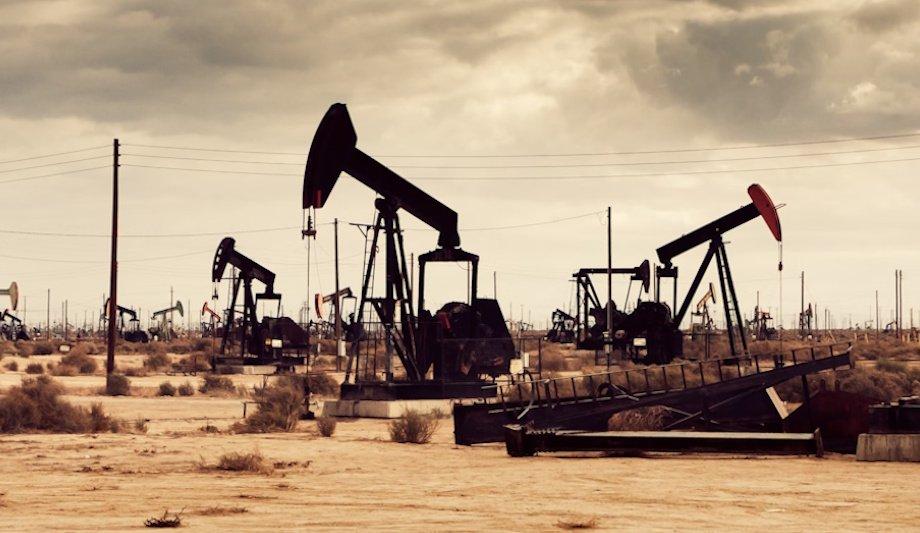
The International Energy Agency (IEA) has released a report revealing an alarming rise in the decline rates of oil and gas fields globally.
Without sustained investment in these fields, the world is at risk of losing a production volume equivalent to the combined output of Brazil and Norway annually, posing significant challenges to maintaining current production levels.
The report sheds light on how increased reliance on shale and deep offshore resources has accelerated these decline rates, demanding more effort from companies just to sustain current output.
Impact on Global Oil and Gas Production
The findings highlight that nearly 90% of annual upstream investment is dedicated to offsetting supply losses
The recent IEA report, The Implications of Oil and Gas Field Decline Rates, addresses the often-underemphasized supply-side factors in the oil and gas sector.
While discussions typically focus on demand trends, this analysis aims to rebalance the conversation by using data from approximately 15,000 oil and gas fields worldwide.
The findings highlight that nearly 90% of annual upstream investment is dedicated to offsetting supply losses from existing fields, as noted by IEA Executive Director, Fatih Birol.
Investment and Market Implications
Fatih Birol emphasized, “Decline rates are the elephant in the room for any discussion of investment needs in oil and gas, and our new analysis shows that they have accelerated in recent years. In the case of oil, an absence of upstream investment would remove the equivalent of Brazil and Norway’s combined production each year from the global market balance."
He further warned of potential repercussions for market balance, energy security, and emissions.
Variability in Decline Rates
Onshore supergiant oil fields in the Middle East experience a decline rate of less than 2% per year
Decline rates exhibit significant variation across different field types and regions. According to the report, onshore supergiant oil fields in the Middle East experience a decline rate of less than 2% per year.
In contrast, smaller offshore fields in Europe average more than 15% per year. Tight oil and shale gas sectors face even more drastic declines — without investment, their output can drop over 35% in the first year and another 15% in the following year.
Future Production Needs
To ensure stable global oil and gas production, developing new conventional fields will be crucial. Despite ongoing investments in existing fields, over 45 million barrels per day (mb/d) of oil and nearly 2000 billion cubic meters (bcm) of gas will be needed from new fields by 2050 to maintain current production levels.
This requirement corresponds to the total output of all top three producers combined, although reduced demand for oil and gas could lower these figures.
The report also indicates that the process from obtaining an exploration license to reaching initial production spans nearly two decades on average, emphasizing the need for timely and strategic investments to counteract the accelerated decline rates.
Without continued investment in these fields, the world would lose the equivalent of Brazil and Norway’s combined production from the global oil balance each year.
The average rate at which oil and gas fields’ output declines over time has significantly accelerated globally, largely due to higher reliance on shale and deep offshore resources, meaning that companies must work much harder than before just to maintain production at levels, according to a new IEA report.
Groundbreaking IEA analysis
The international conversation over the future of oil and gas often focuses on demand trends, while the factors affecting supply receive considerably less attention.
The new IEA report, The Implications of Oil and Gas Field Decline Rates, seeks to rebalance this debate by drawing on previous groundbreaking IEA analysis on decline rates and exploring what has changed. The new analysis draws on production data from around 15 000 oil and gas fields from around the world.
Discussion of investment needs in oil and gas
"Only a small portion of upstream oil and gas investment is used to meet increases in demand, while nearly 90% of upstream investment annually is dedicated to offsetting losses of supply at existing fields," said IEA Executive Director, Fatih Birol.
He adds, "Decline rates are the elephant in the room for any discussion of investment needs in oil and gas, and our new analysis shows that they have accelerated in recent years. In the case of oil, an absence of upstream investment would remove the equivalent of Brazil and Norway’s combined production each year from the global market balance."
Fatih Birol continues, "The situation means that the industry has to run much faster just to stand still. And careful attention needs to be paid to the potential consequences for market balances, energy security and emissions."
Onshore supergiant oil fields
Onshore supergiant oil fields in the Middle East decline at less than 2% per year
Decline rates vary widely across field types and geographies. Onshore supergiant oil fields in the Middle East decline at less than 2% per year, while smaller offshore fields in Europe average more than 15% per year, according to the report.
Tight oil and shale gas decline even more steeply: without investment, output falls by more than 35% over one year and a further 15% over a second year.
In 2010, a halt in upstream investment would have cut oil supply by just under 4 million barrels per day (mb/d) each year. Now the equivalent figure is 5.5 mb/d, while natural gas decline rates have risen from 180 billion cubic meters (bcm) per year to 270 bcm.
new conventional fields
Against this backdrop, keeping global oil and gas production constant over time would require the development of new resources. Even with continued spending on existing fields, the IEA’s analysis shows that more than 45 mb/d of oil and nearly 2000 bcm of gas from new conventional fields would be required by 2050 to maintain production at levels.
This would be the equivalent of adding the total oil and gas production from all of the top three producers combined. The amounts could be reduced if oil and gas demand were to come down.
The new report also highlights that it has taken almost 20 years on average to move from issuing an exploration license for oil and gas until first production, including nearly a decade to discover new fields and a further decade for appraisal, approval and construction.