In the aftermath of Winter Storm Cora, nearly 1,000 SWEPCO team members and utility professionals quickly assessed hundreds of repair locations across the service area.
Within 24 hours, crews restored power to 67 percent of affected customers. Efforts to restore power to all customers are ongoing. At 8 a.m., Friday, the winter storm caused 36,637 outages across SWEPCO’s three-state service territory, which have since been reduced to roughly 10,000. Work continues.
SWEPCO's right-of-way
Initial assessments indicate that over 100 spans of wire need repair, with each span averaging 150 feet in length
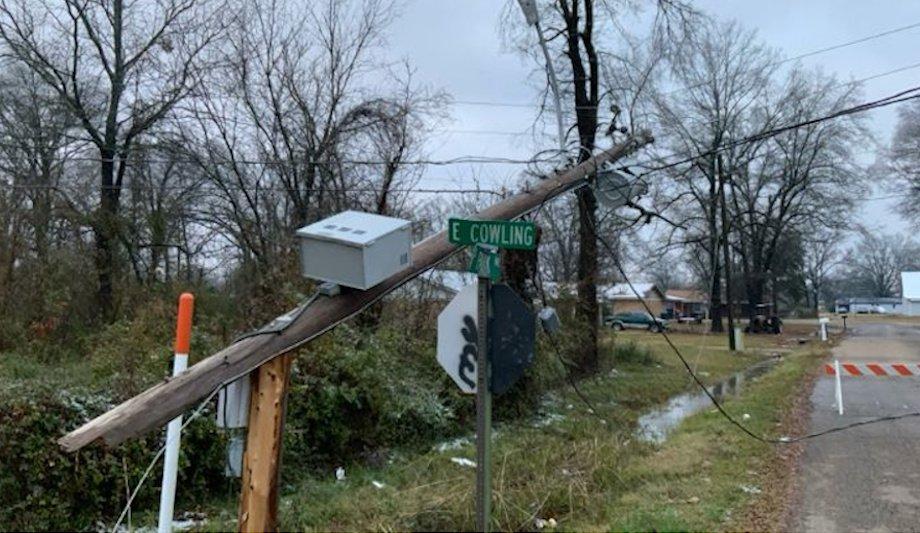
In the Texarkana region, Winter Storm Cora delivered a significant icy blast that resulted in considerable damage, bringing down trees and power lines and causing approximately 34,000 outages.
Initial assessments indicate that over 100 spans of wire require repair, with each span averaging 150 feet in length. Additionally, forestry personnel have been activated to clear more than 500 trees that fell from outside SWEPCO's right-of-way.
Updates on the estimated restoration time
Event restoration times have been communicated with customers, and work continues with many potentially having power restored sooner. Due to the severity of the damage, this will result in a multi-day outage event.
The more damage there is to the system, the further out in time the global ETR will be. Please note that these restoration times could change based on the complexity of repairs. Customers who signed up for email or text alerts could receive direct updates on the estimated restoration time at their home or business as crews continue working to restore power.
Revised restoration
The company has shared revised restoration estimates:
10 p.m., Jan. 11
- Mount Pleasant, Texas
10 a.m. Sunday, Jan. 12
- Texarkana area, including Arkansas communities of Ashdown, Texarkana, De Queen and Nashville and Texarkana, Texas
Safety Reminders
Generator Safety
As they work to restore power, their safety and the safety of the employees are the top priority! Here are three essential tips for generator use:
- Prevent Backfeed: Use a transfer switch for safe connections to avoid backfeeding, protecting the lineworkers.
- Follow Manufacturer's Instructions: Always read the manual and operate the generator as directed.
- Keep Generators Outdoors: Avoid carbon monoxide risks by using generators outside and away from windows.
Stay Aware of Hazards from Damaged Limbs
Ice accumulation can snap tree limbs and power lines even after the storm has passed
Ice accumulation can snap tree limbs and power lines even after the storm has passed. Stay aware of hazards. As a reminder, during an ice storm, ice can build up on tree branches, causing them to become heavy and potentially break or fall.
When the weather improves and things start to thaw, some branches that were weighed down may rise back up. This can lead to those branches interfering with power lines that were just fixed, which might cause power outages to happen again.
They experienced similar situations during the ice storms of 2000 and 2009, when the thawing of weighed-down branches led to power outages after repairs had been made.
Stay Away From Downed Power Lines
All downed power lines should be considered energized and dangerous. Do not touch anything in contact with the line, such as trees, fences, or puddles of water.
Keep children and pets inside during and after the storm. Stay at least ten feet away from any downed power line.
Can they receive power?
Now is the time for customers to determine whether their home can receive power-SWEPCO cannot connect power to a home or business if there is damage to the service entrance, which is owned by the customer. Customers must have a licensed electrician repair damage before power can be restored.
Additionally, for customers concerned about winter heating costs, SWEPCO has tools and resources available at SWEPCO.com/billhelp, and the federal Low Income Home Energy Assistance Program can offer aid to income-qualified residents. Winter heating applications are being accepted in Texas, Louisiana, and Arkansas. Use the National Energy Assistance Referral (NEAR) Service to connect to the local LIHEAP office and find other available resources.