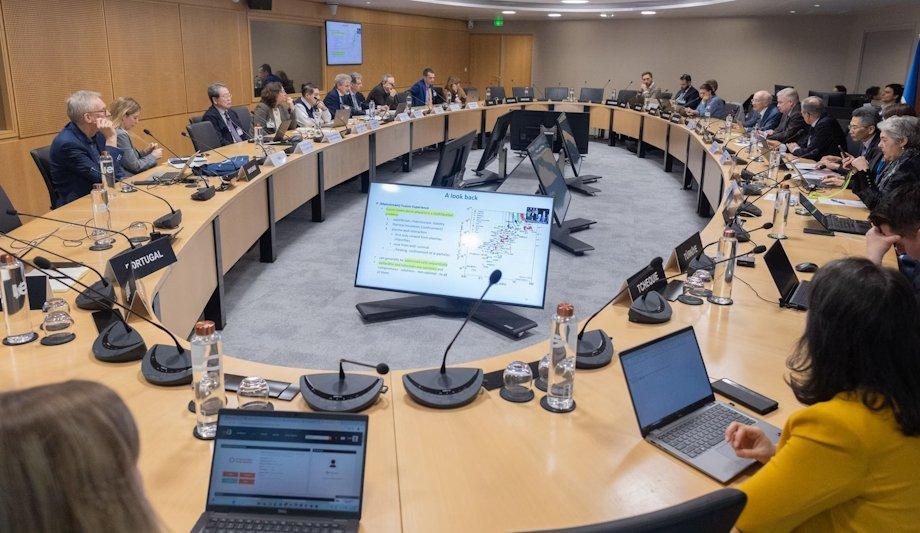
A thematic workshop focusing on the current landscape and future of fusion energy was recently held at the headquarters of the International Energy Agency (IEA).
Organized in conjunction with the IEA's Committee on Energy Research and Technology (CERT) meeting, the event aimed to foster discussion on this emerging field. The gathering featured participants from both academia and industry, who shared their insights on fusion energy with representatives from IEA member countries.
Priority Actions for Fusion Energy Progress
The workshop, attended by over 30 individuals in person and another 40 online, addressed pivotal steps that governments need to take to advance fusion energy research and development. Emphasis was placed on enhancing collaboration between public institutions and private sector entities, a necessity for achieving breakthroughs in fusion energy technology.
Toshiyuki Sakamoto, Vice Chair of CERT, along with Timur Gül, the IEA's Chief Energy Technology Officer, and David Maisonnier, Chair of the Fusion Power Coordinating Committee (FPCC), welcomed attendees. These leaders underscored the potential of fusion energy to produce unlimited baseload electricity with negligible carbon emissions and minimal radioactive waste, despite the technological hurdles that remain.
Fusion Energy: Opportunities and Challenges
The workshop examined both the opportunities and difficulties inherent in advancing fusion energy initiatives
The workshop examined both the opportunities and difficulties inherent in advancing fusion energy initiatives. Currently, a variety of experimental fusion projects are active worldwide, with the United States, Europe, and Asia making significant strides in research and development. During discussions, participants stressed the need for effective policies and funding strategies to expedite progress in this domain, prioritizing government and industry-driven innovations.
Given the intricate nature of fusion energy projects, international cooperation was identified as essential to enhance research outputs and foster stronger partnerships between industry stakeholders and publicly funded research entities.
The Role of IEA in Fusion Energy Research
For many years, the IEA has been a proponent of fusion energy research through its Technology Collaboration Programmes (TCPs). These programs address both fundamental and applied questions in the field while also considering cross-cutting issues such as safety. Through such initiatives, the IEA aims to support and coordinate global efforts to unlock the full potential of fusion energy.